Author Archives: ICLMG CSILC

Confronting the CRA’s Prejudiced Audits

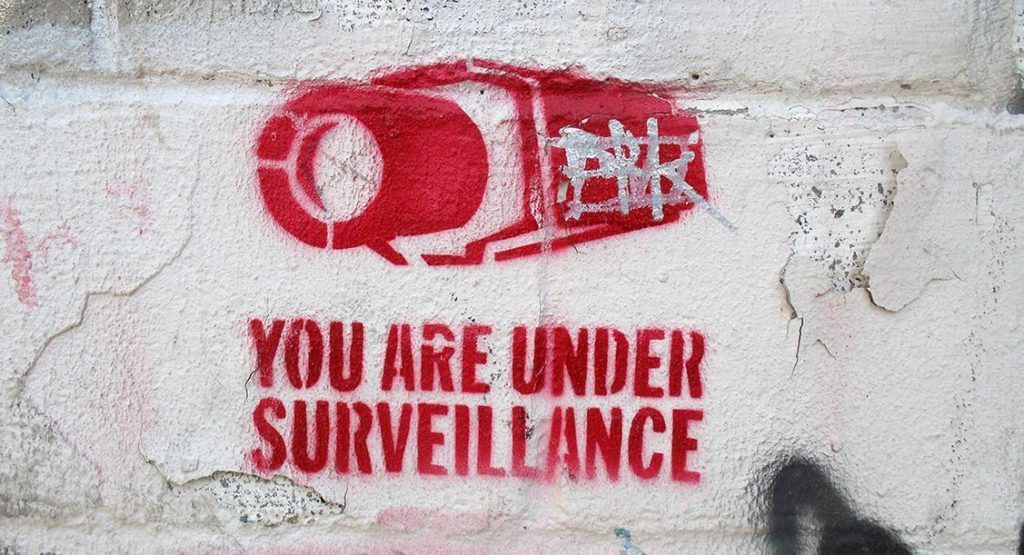
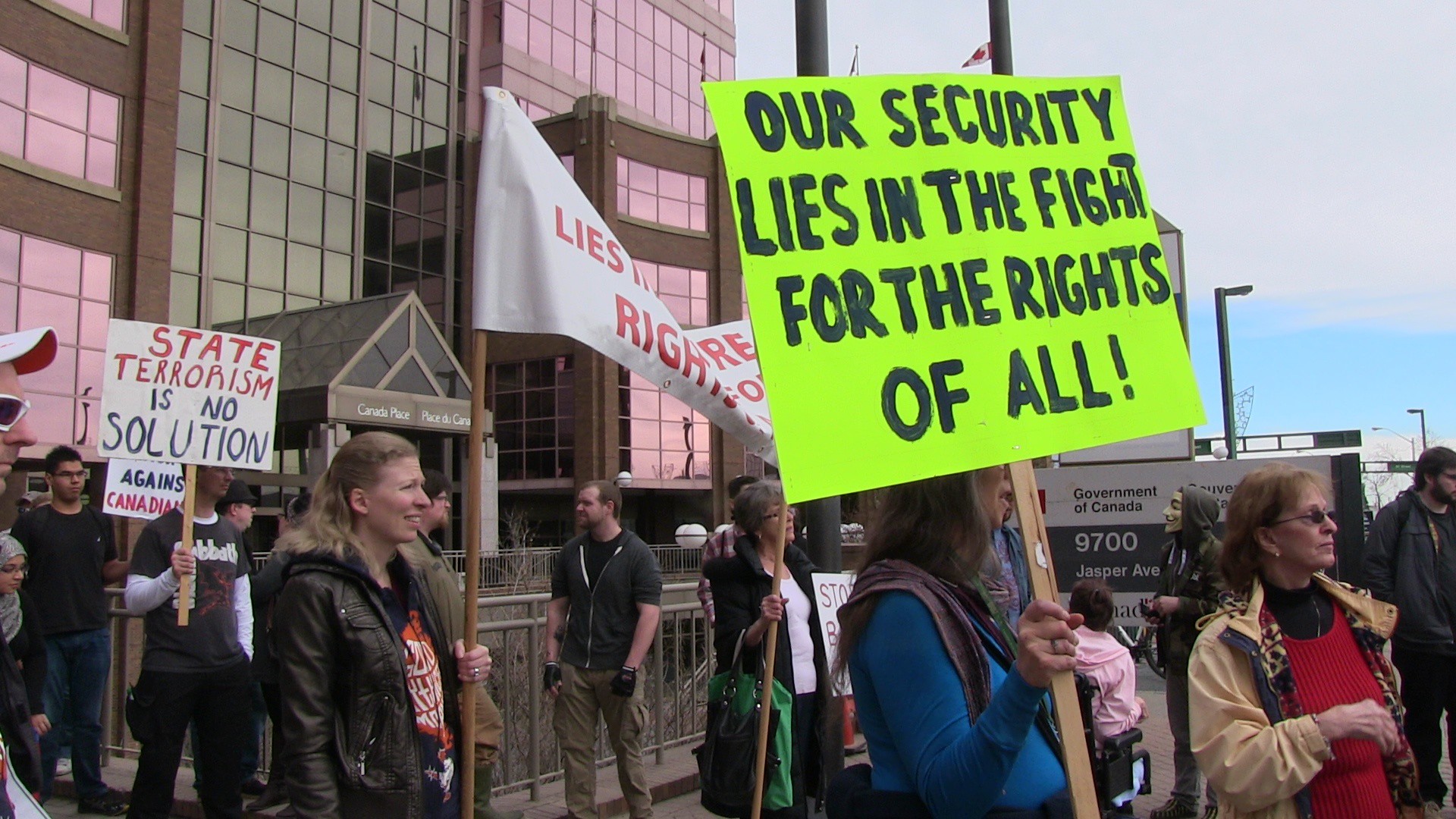
Graphics for ICLMG’s report The CRA’s Prejudiced Audits: Counter-Terrorism and the Targeting of Muslim Charities in Canada. ICLMG/Omar Hafez

By Tim McSorley

In June 2021, the ICLMG released The CRA’s Prejudiced Audits: Counter‑Terrorism and the Targeting of Muslim Charities in Canada,1Tim McSorley, The CRA’s Prejudiced Audits: Counter-Terrorism and the Targeting of Muslim Charities in Canada, ICLMG, June 8, 2021: https://iclmg.ca/prejudiced-audits/ a report detailing how a secretive division within the Canada Revenue Agency (CRA) targets Muslim charities in Canada for investigation, audits and even revocation, based on prejudiced and unsupported allegations of a risk of terrorist financing.

The report reveals how, as Canada ramped up attempts to counter terrorist financing after the September 11, 2001 attacks in the United States, the CRA and its Charities Directorate were enlisted to monitor the work of Muslim charities in Canada under the unsupported premise that they pose a significant terror financing risk. This work has been carried out largely in secret, with little to no outside review or public substantiation of the so-called risk posed by Muslim charities, allowing for the profiling and targeting of Muslim charities to go largely unnoticed and unchallenged.

The report demonstrates how the Review and Analysis Division (RAD), a little-known division of the CRA, in conjunction with other departments and agencies, targets Muslim charities:

  • The Canadian government’s National Risk Assessment (NRA) for terrorism financing in the charitable sector focuses almost exclusively on Muslim charities, and entirely on charities based in racialized communities, with little to no public substantiation of the risk;
  • This risk assessment is used to justify surveillance, monitoring and audits of leading Muslim charities on questionable grounds;
  • RAD operates largely in secret, in tandem with national security agencies, with little to no accountability and no independent review;
  • Between 2008 and 2015, 75% of all charities revoked by RAD following these secretive audits were Muslim charities, harming the sector and impacting the larger Muslim community in Canada. The number of audits and revocations before and after that period are unknown because they have never been made public.

The report recommended the following:

  1. That the federal government refer this issue to review by the National Security and Intelligence Review Agency (NSIRA) in order to examine the CRA’s RAD processes overall, and specifically its selecting of Muslim charities for audit, so as to ensure organizations are not being targeted due to racial or religious prejudice;
  2. That the Minister of National Revenue declare an immediate moratorium on targeted audits of Muslim charities by RAD until the review has concluded;
  3. That the Ministry of Finance revisit the anti-terror regulatory, policy and legislative landscape, particularly the 2015 NRA and its impact, particularly on the Muslim community;2In mid-2023, the Department of Finance released an updated version of the National Risk Assessment. While it contained new language warning against the assessment’s findings being used as the “basis or justification for discriminatory behavior or action toward specific communities in Canada or abroad,” it continued to situate the highest risk of terrorist financing among charities as being in racialized, diaspora communities or in those operating internationally, and once again focused primarily on so-called “Islamist terrorism” risks, without substantiation of actual terrorist financing https://www.canada.ca/content/dam/fin/programs-programmes/fsp-psf/nira-neri/nira-neri-eng.pdf.
  4. That the federal government amend the NSIRA Act to allow for complaints from the public regarding the CRA’s national security-related activities; and
  5. That NSIRA and the National Security and Intelligence Committee of Parliamentarians (NSICOP) coordinate to carry out regular reviews of the CRA’s anti-terrorism activities – including the Charities Directorate and RAD – going forward.

The release of our report, combined with our public launch (recorded online)3Tim McSorley, “Video: The CRA’s Prejudiced Audits with author Tim McSorley,” ICLMG, June 10, 2021: https://iclmg.ca/prejudiced-audits-event/ , led to substantial public interest and advocacy work. Our letter writing campaign4Xan Dagenais, “Stop Prejudiced Audits of Muslim Charities,” ICLMG, June 9, 2021: https://iclmg.ca/stop-prejudiced-audits/ resulted in more than 2,400 emails sent to government officials calling for action, and we organized a joint letter5Tim McSorley, “Letter to PM Trudeau: Stop the CRA’s prejudiced audits of Muslim charities,” ICLMG, June 23, 2021: https://iclmg.ca/prejudiced-audits-letter/ to the Prime Minister that was signed by more than 130 groups supporting our recommendations. The report made a lot of waves in the media, leading to the publication of more than 75 news articles and op-eds. The Prime Minister was forced to respond immediately with concern, saying he “realized that systemic discrimination exists throughout every institution.”6Achau Luu, “Trudeau addresses potential CRA bias against Muslim-led charities,” OMNI, July 26, 2021: https://www.omnitv.ca/there-is-discrimination-in-all-systems-trudeau-addresses-potential-cra-bias-against-muslim-led-charities/

This issue was a key point at the July 2021 National Summit on Islamophobia, and resulted in the Trudeau administration tasking the taxpayers’ ombudsperson François Boileau with investigating concerns of charities around systemic discrimination, with a particular focus on Muslim charities and other charities led by people of colour. The ombudsperson was also to examine the revenue agency’s efforts to root out discrimination. We raised concerns in the media, and were quoted extensively about worries that the ombudsperson’s mandate may be too narrow to examine this system in its entirety.

Although this investigation was not what we had asked for, we were initially optimistic given the government had reacted quickly. We were also in frequent communication with the office of the ombudsperson to offer support, advice and keep up with the investigation. This is why an update on the review in February 2022 left us surprised and disappointed as it did not even mention Islamophobia once, promised to review ‘fairness’ overall rather than examine specific concerns and added that the office will not investigate the role of Canada’s national security agencies in this issue. We sent an open letter to the Trudeau government sharing these concerns and naming important elements that the review should include moving forward.7Tim McSorley, “Government must take bold action if it is serious about resolving systemic Islamophobia in CRA counter-terrorism audits,” ICLMG, February 10, 2022: https://iclmg.ca/government-must-take-bold-action-if-it-is-serious-about-resolving-systemic-islamophobia-in-cra-counter-terrorism-audits/

In November 2022, the Taxpayers’ Ombudsperson testified at the Standing Senate Committee on Human Rights (RIDR) that his office is working with one hand tied behind its back, and that the ensuing report will have gaps, as they cannot access critical information. We responded to this by meeting with the Ombudsperson regarding his revelation, publishing an op-ed8Tim McSorley, “Canada’s persecution of Muslim charities must stop,” The National Post, December 5, 2022: https://nationalpost.com/opinion/canadas-persecution-of-muslim-charities-must-stop on the troubling developments and following up with the ministry of Finance regarding updating risk assessment policies for the charitable sector. In response to the significant concerns raised about the Ombudsperson’s investigation, the NSIRA launched its own review of the issue in March 2023 – which was one of our original recommendations in June 2021!

The Ombudsperson’s report, published later that same month, reflected the concerns he expressed at the Senate. Despite his diligence, it did not address the central concerns we had raised. We responded by calling on the government, once again, to suspend the work of RAD and ongoing audits until the NSIRA finishes its review and legislative changes are made.9Tim McSorley, “Taxpayers’ Ombudsperson report on systemic bias at Canada Revenue Agency demonstrates need for moratorium, accountability and transparency,” ICLMG, March 27, 2023: https://iclmg.ca/taxpayers-ombudsperson-report-on-systemic-bias-at-canada-revenue-agency/

You can read more about this issue and take action at iclmg.ca/prejudiced-audits


Tim McSorley is the National Coordinator of the International Civil Liberties Monitoring Group


Back to table of contents

Since you’re here…

… we have a small favour to ask. Here at ICLMG, we are working very hard to protect and promote human rights and civil liberties in the context of the so-called “war on terror” in Canada. We do not receive any financial support from any federal, provincial or municipal governments or political parties. You can become our patron on Patreon and get rewards in exchange for your support. You can give as little as $1/month (that’s only $12/year!) and you can unsubscribe at any time. Any donations will go a long way to support our work.panel-54141172-image-6fa93d06d6081076-320-320You can also make a one-time donation or donate monthly via Paypal by clicking on the button below. On the fence about giving? Check out our Achievements and Gains since we were created in 2002. Thank you for your generosity!
make-a-donation-button

Footnotes

Loss of Human Rights in the ‘War on Terror’: The Case of Hassan Diab

Hassan Diab (centre left) is joined outside parliament by (left to right) lawyer Don Bayne; Rania Tfaily, professor and spouse of Hassan Diab; Alex Neve, then Secretary General of Amnesty International Canada; Hassan Diab Support Committee member Roger Clark; and ICLMG national coordinator Tim McSorley. Credit: Alex Neve.

By Roger Clark

We tend to see the ‘War on Terror’ largely as a 21st-century phenomenon, inextricably linked to 9/11 and the consequent war in Afghanistan. However, I want to reflect on this in light of a deadly bombing outside a synagogue that took place in Paris some 20 years earlier. Following this attack, Hassan Diab became a convenient target and a timely personification of the terrorist threat, particularly as defined by the West. This resulted in the outrageous miscarriage of justice of which Hassan Diab remains the victim today. France decided to initiate a trial driven by political convenience in April 2023, and shockingly – despite evidence to the contrary – convicted Hassan Diab in absentia that month.

On August 4, 1978, the European Convention on the Suppression of Terrorism entered into force. Essentially, in so doing, the member countries of the Council of Europe strived to reinforce cooperation both internally – through national prevention policies – and internationally – by modifying existing extradition and mutual assistance arrangements. Specifically, member countries declared themselves:

Aware of the growing concern caused by the increase in acts of terrorism; wishing to take effective measures to ensure that the perpetrators of such acts do not escape prosecution and punishment; convinced that extradition is a particularly effective measure for achieving this result (emphasis added).

Unsurprisingly, Canada was already actively bringing its old and outdated extradition legislation into line with that of its European allies. The resulting Extradition Act came into force in June 1999. Its flaws and failings are now obvious to all, largely as a result of the experience of those who have been caught up in its ‘rubber-stamping’ mechanisms.

A bright light in this judicial darkness is the decision in September 2022 by the parliamentary Standing Committee on Justice and Human Rights to “undertake a comprehensive study on Extradition Law reform,” seeking recommendations on “how to overhaul thecurrent system.”[1] To coin a phrase, “if it’s broke, you’d better fix it.”

I see as no coincidence that the investigation into the deadly bombing of October 3, 1980, outside the synagogue on rue Copernic in Paris, was suddenly reactivated in 1999. It had lain dormant for almost twenty years. Unsourced and unverified secret intelligence mentioned the name ‘Hassan Diab’. Eight years went by before France requested Hassan’s arrest and extradition.

Now is neither the time nor place to analyze the five-year legal struggle which ended with Hassan Diab being put on a plane to Paris on November 14, 2014. He spent thirty-eight months in the Fleury-Mérogis prison, mostly in solitary confinement. The two anti-terrorist investigating judges in charge of the case concluded that there was no evidence to justify bringing Hassan to trial. He was unconditionally released and returned to Canada on January 15, 2018. Throughout all this, he was never charged and he was never tried. 15 years later, the nightmare continues with his conviction in France.

I’ll close with a brief quote from Justice Robert Maranger’s 2011 decision approving Hassan’s extradition: “…the case presented by the Republic of France against Mr. Diab is a weak case; the prospects of conviction in the context of a fair trial seem unlikely.”

That says it all.

I’d like to thank the ICLMG for its outstanding work over so many years. Tim and Xan continually earn our collective gratitude for building and growing this essential space where collaboration, partnerships and courage in the defence of human rights can thrive and become more effective.

More information & ways to take action at justiceforhassandiab.org & iclmg.ca/diab-letter 


Roger Clark is the former director of Amnesty International (Canada), a longtime activist working for the promotion, protection, and observation of international human rights.

Footnote

[1] The study report has since been published: Randeep Sarai, Reforming Canada’s Extradition System: Report of the Standing Committee on Justice and Human Rights, Parliament of Canada, June 2023: https://www.ourcommons.ca/DocumentViewer/en/44-1/JUST/report-13/

Back to table of contents

Since you’re here…

… we have a small favour to ask. Here at ICLMG, we are working very hard to protect and promote human rights and civil liberties in the context of the so-called “war on terror” in Canada. We do not receive any financial support from any federal, provincial or municipal governments or political parties. You can become our patron on Patreon and get rewards in exchange for your support. You can give as little as $1/month (that’s only $12/year!) and you can unsubscribe at any time. Any donations will go a long way to support our work.panel-54141172-image-6fa93d06d6081076-320-320You can also make a one-time donation or donate monthly via Paypal by clicking on the button below. On the fence about giving? Check out our Achievements and Gains since we were created in 2002. Thank you for your generosity!
make-a-donation-button

The Fight for the Return of Canadians Detained in Northeast Syria

Jack Letts’ mother, Sally Lane, and social justice advocate Matthew Behrens at the Supreme Court of Canada. Credit: Free Jack Letts

By Justin Mohammed

For the past four years, dozens of Canadian citizens – about half of whom are children – have been arbitrarily detained in Northeast Syria. Most have been living in squalid camps, in conditions that the United Nations Special Rapporteur on the promotion and protection of human rights and fundamental freedoms while countering terrorism has found to constitute torture, cruel, inhuman, and degrading treatment or punishment. Their plight has, until very recently, gone under the radar of the Canadian public, media and political leaders. In stark contrast to others, such as Michael Kovrig and Michael Spavor who have become household names due to the laudable efforts of the Government of Canada to bring them home from China, the Canadians detained in Northeast Syria have been stonewalled with a multitude of justifications about why Canada cannot repatriate them.

From the moment that the ICLMG became aware of this situation, it has steadfastly stood up for the human rights of these citizens. In 2019, a coalition of academics, civil society organizations, and lawyers were convened to discuss how this situation could be addressed, with the ICLMG playing an active role in those conversations. After a year of government advocacy, gathering information from the detainees’ relatives, and strategizing on ways to pressure the government into action, this coalition pushed the issue squarely into the public arena in January 2020, writing to Prime Minister Justin Trudeau and demanding that he take action on behalf of these citizens. Human Rights Watch followed up with a landmark report on the Canadian detainees in June 2020, providing a springboard for the ICLMG and others to continue advocacy on these cases. In the first half of 2021, both the House of Commons Foreign Affairs Committee and the Subcommittee on International Human Rights held hearings on the topic, during which Amnesty International, Save the Children, Human Rights Watch and others testified about the pressing need for action.

The first breakthrough came in October 2020, when a five- year-old orphaned girl was finally repatriated to Canada, and since then the ICLMG has played a leading role in sustaining the pressure on the Government of Canada. It spoke out against the secretive consular policy created by Global Affairs Canada that established an entirely separate framework for Canadians detained in Northeast Syria, and in June 2022, the ICLMG hosted a webinar highlighting the parallels of the Canadian detainees’ situation with the unlawful detention carried out by the United States at Guantanamo Bay. Since then, a number of the Canadian detainees have been able to return but many remain trapped in Northeast Syria.

With limited action from the Canadian government, in December 2022, lawyers Lawrence Greenspon and Barbara Jackman took the case of the Canadian detainees to the Federal Court of Canada, seeking to force the government into action. Regrettably, the Government of Canada continues to deny that it has any legal responsibility towards this group of Canadians, despite holding the very keys that would put an end to the human rights violations they are suffering on a daily basis. This intransigence indicates that the lessons of commissions and reports of the past, such as the Arar Inquiry, the Iacobucci Inquiry, and the 2018 Auditor General’s report on consular services, have not yet been learned. The scandalous treatment of the Canadians detained in Syria is sadly destined to be the next chapter in this shameful history.


Justin Mohammed is the former Program Manager (Campaigns & Advocacy) at Amnesty International Canada, and a former representative for Amnesty on the ICLMG steering committee.

Canada: Bring Them Home!

By Xan Dagenais

On January 20, 2023, Federal Court Justice Henry Brown ruled that Canada must repatriate Canadians illegally and arbitrarily detained in Northeast Syria in conditions United Nations officials have found to be akin to torture. Brown wrote that the government was in breach of section 6 of the Canadian Charter of Rights and Freedoms – guaranteeing all Canadians the right to enter, remain in, and exit Canada – and must act “as soon as reasonably possible” to bring Canadians home. Since then, the government has repatriated several Canadian women and children, but not all Canadians.

The Canadian government filed an appeal and, disappointingly, the Federal Court of Appeal overturned the lower court’s decision. The families of the Canadians left behind have recently asked the Supreme Court to reconsider its shocking decision not to hear their appeal and play its role as a guarantor of rights and justice, as the government is not doing so of its own accord.

The government continues to have no justification to refuse to repatriate all detained Canadians. It does not allege any of them engaged in or assisted in terrorist activities, and Justice Brown saw no evidence that any detainee had committed offenses contrary to Canadian law.

It remains crucial to send the government a strong message to act quickly. Every day the government fails to bring home these Canadians, it places their lives at risk from disease, malnutrition, violence, and ongoing armed conflicts, including bombing by Turkey’s military.

Please take action and share widely: iclmg.ca/repatriate-all-canadians


Xan Dagenais is the Communications and Research Coordinator of the International Civil Liberties Monitoring Group

Back to table of contents

Since you’re here…

… we have a small favour to ask. Here at ICLMG, we are working very hard to protect and promote human rights and civil liberties in the context of the so-called “war on terror” in Canada. We do not receive any financial support from any federal, provincial or municipal governments or political parties. You can become our patron on Patreon and get rewards in exchange for your support. You can give as little as $1/month (that’s only $12/year!) and you can unsubscribe at any time. Any donations will go a long way to support our work.panel-54141172-image-6fa93d06d6081076-320-320You can also make a one-time donation or donate monthly via Paypal by clicking on the button below. On the fence about giving? Check out our Achievements and Gains since we were created in 2002. Thank you for your generosity!
make-a-donation-button