Far from being a thing of the past, the war on terror has intensified over the years. It continues to fuel a power dynamic that erodes civil liberties in Canada, in the name of national security. Faced with this, the mobilizations of recent months, triggered by a flurry of bills proposed by the federal government, must intensify and rely on the strength of multi-sectoral coalitions.
by Tim McSorley (he), National Coordinator, ICLMG
and Xan Dagenais (they), Communications and Research Coordinator, ICLMG
This article first appeared in French in the 2026 Spring/Summer issue of Droits et libertés
Following the September 11, 2001, attacks in the United States, a wave of repression and curtailment of rights swept not just the US, but Canada as well. Authorities used this crisis and people’s fears to urgently pass laws that expanded surveillance, eroded due process and fair trial guarantees, and limited freedom of expression, shrinking civic space overall. Muslim and racialized communities were disproportionally impacted, facing a surge of racism and xenophobia. In Canada, the rushed passage of the Anti-terrorism Act of 2001 resulted in the targeting of peaceful activists, a chilling effect on international development NGOs and humanitarian assistance, and an increase in religious, racial and political profiling. Alarmed by this rapid erosion and wanting to protect civil liberties, a group of organizations came together to create the International Civil Liberties Monitoring Group (ICLMG). While the War on Terror is often viewed as a thing of the past, it was consistently built on over the years, culminating in what we see today. Around the world, repression of protest and free expression, tightening of borders, illegal military interventions in the name of fighting terrorism – such as the genocide in Gaza and the war on Iran, spilling into Lebanon – are on the rise.
It is easy to feel that Canada may have avoided the worst of this: In May 2025, the public elected a Liberal government that presented itself as a centrist party and the “grown-up in the room,” hinting at sensible policy changes that would benefit people in Canada. It has since become clear that they are instead governing from the right, and are both willing to sacrifice human rights and fundamental freedoms in the face of right-wing pressure, and use it to help push through regressive policies on climate, Indigenous sovereignty, immigration, security and defence, among other areas. Without opposition, the result will be less freedom of expression and association, even less protection and support for refugees and migrants, the gutting of international law, increased militarism, and an overall weakening of our democratic practices.
Increased surveillance and militarization
Three areas exemplify these concerns. First, the single largest example of the growth of surveillance and militarization in Canada over the past two years has been the push to “protect Canada’s borders,” through both greater securitization and crackdowns on migrants and refugees. In December 2024, the government announced $1.3 billion in spending for increased border surveillance and thousands of new RCMP and border security officers, and dedicated $80 billion in new defence spending in the 2025 budget, raising alarms around potential involvement in US imperial wars and “counter-terror” operations, from the Middle East to the Caribbean and beyond. Some of this is the result of long-term efforts by national security, defence and border agencies looking to bolster their powers, but the catalyst was the claims from US President Donald Trump that huge amounts of fentanyl, terrorists and ‘illegal’ migrants were crossing from Canada into the US, which both governments knew to be false, and that the US would no longer defend Canada if it didn’t reach NATO spending targets. These billions in spending come at the expense of human security due to cuts and lack of investment in housing, healthcare, environmental protections, foreign aid and peacebuilding efforts.
Legislative and repressive attacks
Furthermore, the government is reshaping the legal landscape. Since last May, the Liberals have introduced two dangerous border bills that are anti-privacy, anti-migrant and anti-refugee and will make people across Canada less safe. The first, Bill C-2, the Strong Borders Act, would grant unconstitutional powers to police and intelligence agencies to access our private information without a warrant, and demand that telecom companies modify their systems to facilitate government spying. The second, Bill C-12, the Strengthening Canada’s Immigration System and Borders Act, was adopted in late March 2026. Its provisions bring drastic changes to immigration and refugee laws, placing further undue restrictions on refugee claimants seeking protection in Canada, abandoning them to persecution and violence, and granting the government broad new powers to cancel or suspend immigration documents en masse (including based on country of origin) in the name of an undefined “public interest.” These changes make Canada less safe and less open, while failing to improve the lives of Canadian citizens. Despite the government claiming this is about ensuring the efficiency and maintaining the integrity of the immigration system, it is cutting 3,300 jobs and $100 million from Immigration, Refugees and Citizenship Canada.
Second, we have witnessed a proliferation of crackdowns on dissent and free expression. Provincially and municipally, this has taken the form of police repression and unjustified restrictions on protests, including Charter-violating bubble zone bylaws. At the federal level, the government has introduced Bill C-9, the Combatting Hate Act. While this legislation has been framed as addressing the real and urgent issue of increases in violent hate crimes in Canada, it will instead create a chill against protest and dissent, and risk the criminalization of free expression and free assembly in Canada.[1] The introduction of the bill followed months of pressure on the federal government to take action against the multitude of pro-Palestinian protests and encampments across the country, and civil liberties advocates have warned that the provisions are overly broad, unconstitutional, and could easily be used in discretionary ways.
Weakened democratic process
Third, underlying all these changes is an undermining of government accountability, democratic processes and public engagement. Under the guise of urgency, the government has introduced omnibus legislation (which it had promised it wouldn’t do), held minimal to no consultations (and those that do take place are rushed and skewed towards government’s preferred outcomes), and rammed complex legislation through parliament that will have important impacts on the lives of people across the country. For example, Bill C-2 was tabled without prior consultation, is 140 pages long and proposes significant changes to at least 10 existing laws as well as creating an entirely new act. It was only after significant opposition from civil society, along with opposition MPs, that the government responded. Unfortunately, it was only by introducing new legislation that repackaged parts of Bill C-2 into Bill C-12. The government then used procedural measures to limit time for debate of C-12, undermining the ability to fully study it or bring amendments. It used similar tools to push C-9 through as well. On top of it all, while increasing powers and budgets for security and defence agencies, the government is cutting funding for independent watchdogs, such as the National Security and Intelligence Committee of Parliamentarians and the National Security and Intelligence Review Agency. Already under-resourced, both agencies have said these cuts will “seriously hinder” their work.[2] These bodies are crucial defenses to ensure that laws are being followed and rights protected, but just as they are needed the most, they are being slashed.
Unite and organize
These are all significant challenges, but they can be overcome. Civil society organizing is already moving the needle on many of these issues. It is crucial to act now to reverse course as others are continuing to push the government – and public discourse – further to the right. This means organizing in coalition across sectors, as there is strength in numbers. For example, the summer 2025 campaign against C-2 brought together more than 300 organizations defending migrant and refugee rights, civil liberties and gender justice, leading to the bill being shelved. It also means not just focusing on the government, but also on the public, and finding ways to change the narrative from one of division and exclusion, towards one of solidarity and collective well-being. Together, we can make a difference.
[1] For more on Bill C-9, see Anne Pineault’s article, À Ottawa, un empilage inquiétant de projets de lois, in the last edition of Droits et Libertés
[2] Wesley Wark, “Down comes the budget guillotine on the review bodies”, in his newsletter on November 10, 2025 [online].
Since you’re here…… we have a small favour to ask. Here at ICLMG, we are working very hard to protect and promote human rights and civil liberties in the context of the so-called “war on terror” in Canada. We do not receive any financial support from any federal, provincial or municipal governments or political parties. You can become our patron on Patreon and get rewards in exchange for your support. You can give as little as $1/month (that’s only $12/year!) and you can unsubscribe at any time. Any donations will go a long way to support our work. |







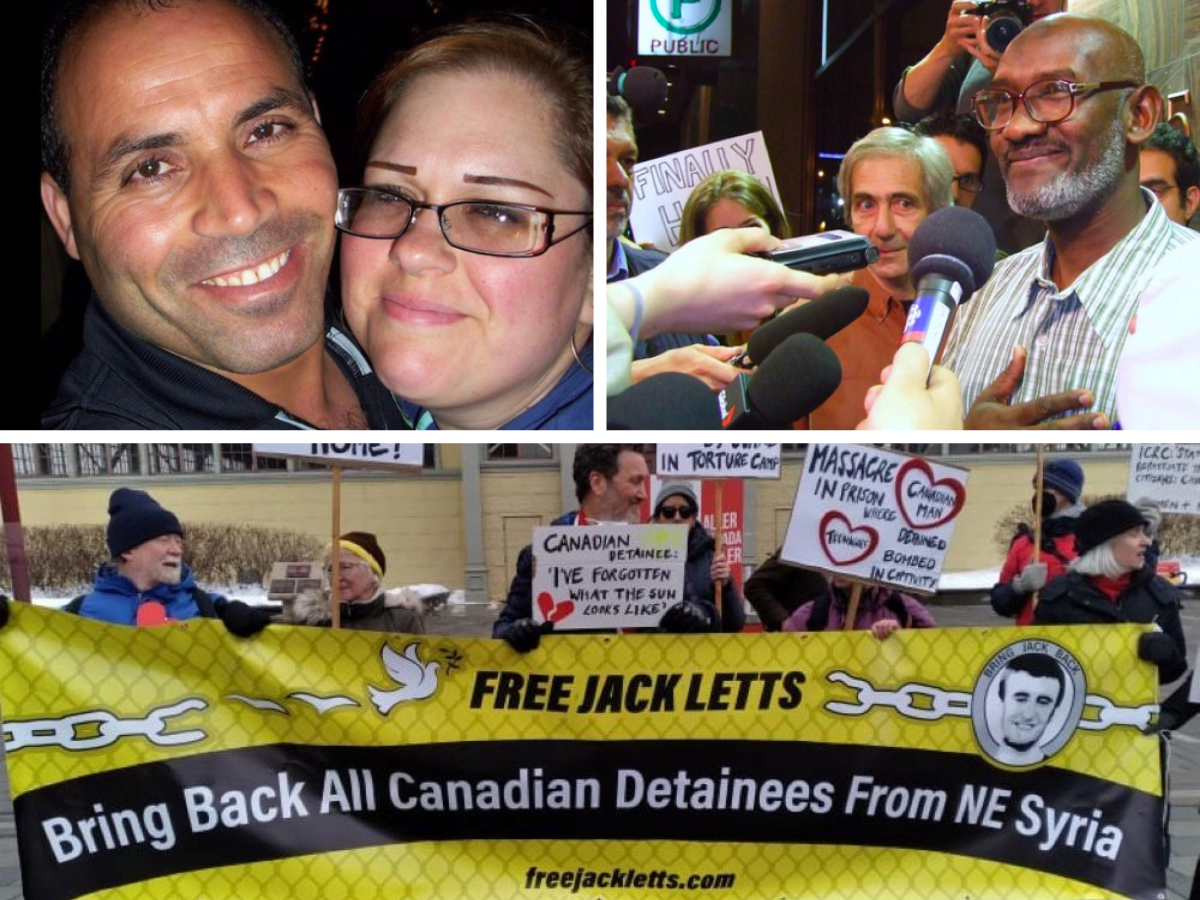 June 26th is the United Nations’ International Day in Support of Victims of Torture. In recognition of this day, ICLMG has sent three letters to the federal government calling on them to stop the Canadian government’s complicity in torture in three different cases: